Capturing the haunting beauty of the loon is a dream for many wildlife photographers, and there is no better place to do it than Algonquin Park. Known for its pristine lakes and rich biodiversity, this iconic destination offers incredible opportunities for common loon wildlife photography for Canadian enthusiasts. If you are planning a trip in 2026, these insider tips will help you elevate your shots from ordinary to unforgettable.
Why Algonquin Park Is Perfect for Loon Photography
Algonquin Park is home to hundreds of lakes, making it one of the best habitats for the Common Loon. The calm waters, minimal urban interference, and abundant fish create ideal conditions for spotting and photographing loons in their natural environment.
For photographers searching for loon pictures, Algonquin Park photography tips, this park provides unmatched access and scenic backdrops that enhance every frame.
Best Spots for Loon Sightings in Algonquin
Some lakes are particularly well known for loon activity. Canoe Lake is one of the most accessible and popular locations, especially for beginners. Lake Opeongo offers a more expansive setting, increasing your chances of spotting loons in quieter areas.
For a more secluded experience, smaller backcountry lakes often provide closer encounters with less disturbance. Exploring these areas can significantly improve your chances when looking for the best spots for loon sightings in Algonquin.
Early morning paddles or evening excursions tend to be the most productive times in these locations.
What Time of Day Are Loons Most Active
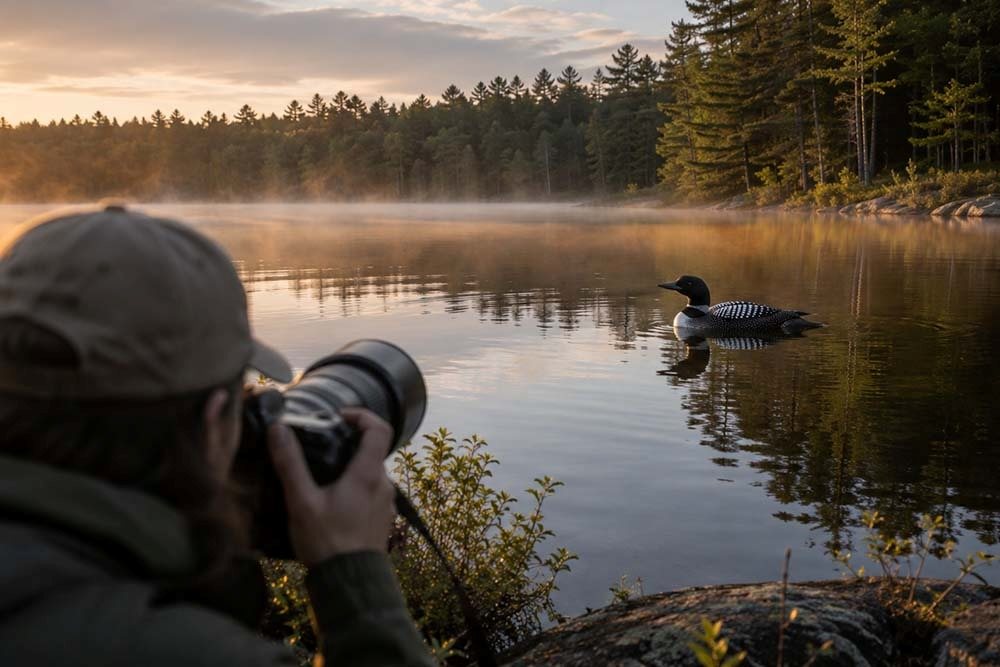
Timing is everything in wildlife photography. Loons are typically most active during early morning and late evening. These periods not only increase your chances of sightings but also provide the best natural lighting.
The soft golden light during sunrise and sunset enhances reflections on the water and adds depth to your images. Midday light, on the other hand, can be harsh and less flattering.
If you are serious about how to photograph loons in Ontario, plan your sessions around these optimal times for both activity and lighting.
Camera Settings for Photographing Loons on the Water
Getting the right camera settings is essential for sharp and well-exposed images. Since loons are often in motion, use a fast shutter speed of at least 1/1000 to freeze movement, especially when they dive or flap their wings.
A moderate aperture such as f/5.6 to f/8 helps keep the subject sharp while maintaining a pleasing background blur. For ISO, adjust based on lighting conditions, but try to keep it as low as possible to reduce noise.
Continuous autofocus and burst shooting modes are highly recommended. These settings allow you to capture quick movements and increase your chances of getting the perfect shot.
Approach and Positioning Techniques
Loons are sensitive to disturbance, so maintaining a respectful distance is crucial. Using a canoe or kayak allows you to move quietly across the water without startling them.
Approach slowly and avoid direct movement toward the bird. Instead, angle your path to appear less threatening. Patience is key in common loon wildlife photography in Canada, as waiting quietly often results in more natural behavior and better photo opportunities.
Using a telephoto lens in the 300mm to 600mm range will help you capture detailed images without getting too close.
Composition Tips for Stunning Shots
To create visually compelling images, focus on composition as much as technical settings. Use the water’s reflection to add symmetry and balance to your photos.
Try shooting from a low angle to create a more intimate perspective. Including elements like mist, trees, or distant shorelines can add context and depth to your images.
Capturing behavioral moments such as diving, calling, or interacting with chicks can make your photos stand out and tell a story.
Are Loons Endangered in Ontario
The Common Loon is not currently classified as endangered in Ontario, but it is considered a species of concern in some areas due to habitat loss, pollution, and human disturbance.
Photographers play an important role in conservation by practicing ethical wildlife photography. Avoid getting too close to nests, minimize noise, and respect park guidelines to help protect these iconic birds.
Conclusion
Photographing loons in Algonquin Provincial Park is a rewarding experience that combines technical skill with patience and respect for nature. By understanding loon behavior, choosing the right locations, and mastering your camera settings, you can capture breathtaking images in 2026.
Whether you are a beginner or an experienced photographer, applying these Algonquin Park photography tips will help you improve your results and make the most of your time in one of Canada’s most beautiful natural settings.
FAQ’s
Q1. Where is the best place to see loons in Algonquin Park?
A: Canoe Lake, Lake Opeongo, and smaller backcountry lakes are among the best spots for loon sightings.
Q2. What time of day are loons most active?
A: Loons are most active during early morning and late evening, which also provides the best lighting for photography.
Q3. What camera settings are best for photographing loons on the water?
A: Use a fast shutter speed around 1/1000, aperture between f/5.6 and f/8, and adjust ISO based on lighting conditions.
Q4. Are loons endangered in Ontario?
A: No, they are not endangered, but they are sensitive to environmental changes and require responsible observation and photography practices.